







 Paul Johnson
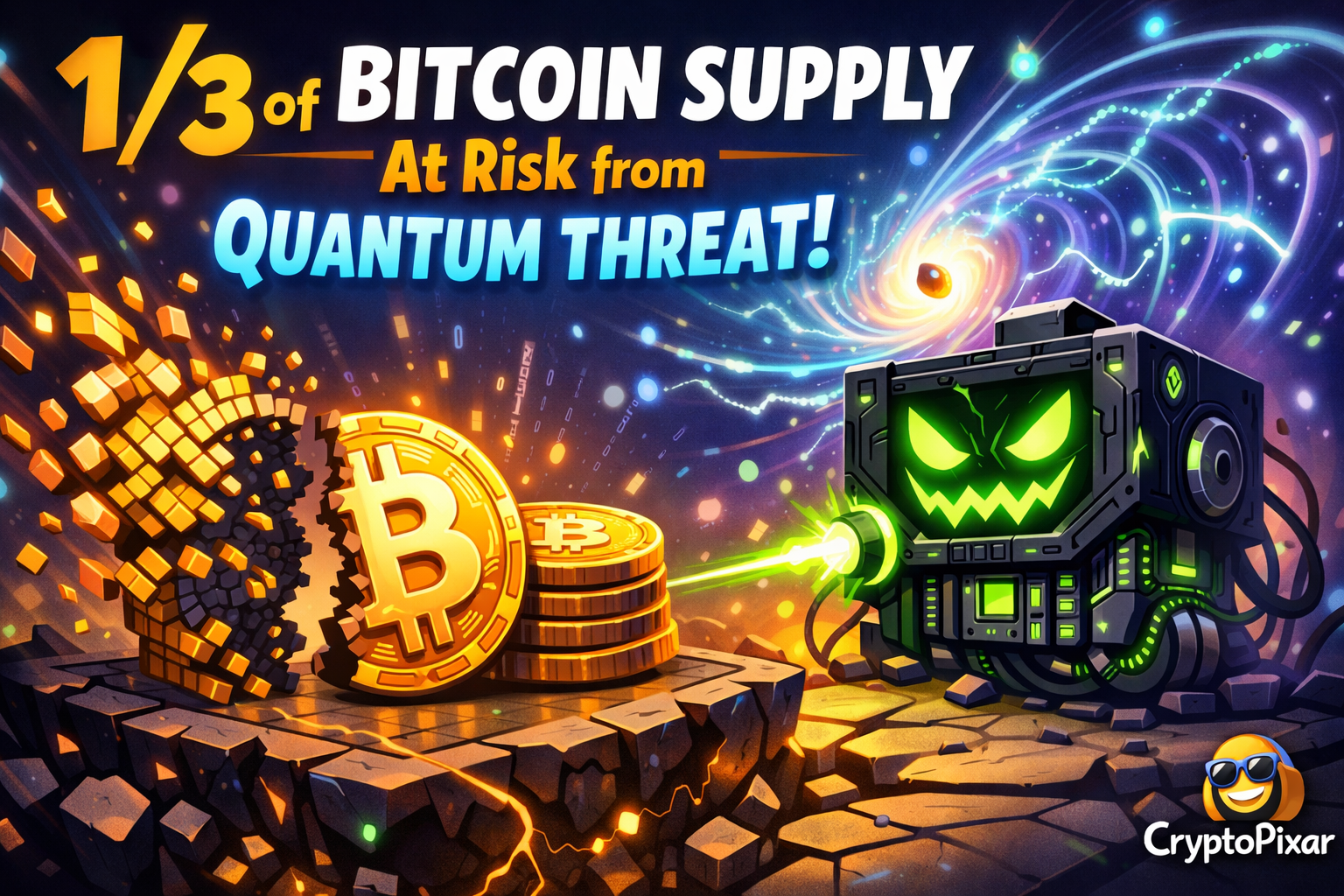
 Bitcoin quantum threat could affect nearly one third of BTC supply according to Ark Invest research. The report explains the long term quantum risk and how Bitcoin may prepare.
Introduction
The conversation around the Bitcoin quantum threat has returned to the spotlight after a new research paper from Ark Invest suggested that a meaningful share of the total BTC supply could be exposed if quantum computing advances far enough. While the risk remains distant, the study highlights how future breakthroughs in quantum technology could challenge the cryptographic foundations of Bitcoin.
According to the report, a large portion of the network already operates with protections that reduce exposure. However, a notable share of coins still sit in address formats that could theoretically become vulnerable if powerful quantum computers eventually break the encryption securing Bitcoin transactions. For the crypto industry, the Bitcoin quantum threat represents a technological challenge that may require years of preparation and coordination.
Ark Invest analysis highlights scale of the Bitcoin quantum threat
The Ark Invest research indicates that around one third of the total Bitcoin supply could eventually be exposed to the Bitcoin quantum threat under certain conditions. The analysis divides the network into categories of coins based on how their addresses interact with cryptographic keys.
The report suggests that more than sixty percent of BTC is already protected from the immediate implications of a Bitcoin quantum threat because those coins have never exposed their public keys on chain. These coins remain protected as long as their associated addresses remain unused.
However, the remaining share presents a different picture. Roughly five million BTC is considered potentially migratable because the addresses have been reused. When an address is reused, the public key becomes visible on the blockchain, which theoretically opens a path for future quantum attacks if encryption systems are compromised.
Another portion of coins is believed to be locked in older transaction scripts that directly exposed public keys. These legacy address formats were common in the earliest days of Bitcoin. Because they reveal public keys immediately, they represent a segment of the network that could be vulnerable if quantum computing reaches sufficient power.
The report also notes that a smaller percentage of coins associated with newer address types may also require migration if long term defenses are introduced to mitigate the Bitcoin quantum threat.
Why the Bitcoin quantum threat is not an immediate danger
Despite the numbers cited in the report, Ark Invest stresses that the Bitcoin quantum threat should be viewed as a long term technological challenge rather than a near term crisis.
Breaking Bitcoin encryption would require quantum machines capable of performing extremely complex calculations at massive scale. Experts estimate that thousands of stable logical qubits and an enormous number of quantum operations would be required to break the elliptic curve cryptography used by Bitcoin.
Current quantum hardware remains far from reaching this threshold. While progress continues, the development timeline suggests that the level of computing power needed to realistically execute such attacks may still be many years away.
Researchers believe the path toward quantum capable machines will unfold in stages. Early stages would demonstrate improvements in quantum computing performance but would not yet be capable of threatening the Bitcoin network.
Only in later stages could a quantum system theoretically break the cryptographic keys that secure Bitcoin transactions faster than the network confirmation cycle. Even then, the industry would likely receive numerous warning signs as technology evolves.
Because of this gradual development path, the Bitcoin quantum threat is expected to provide the community with sufficient time to research and implement defensive measures.
Preparing the network against the Bitcoin quantum threat
Even though the threat remains distant, researchers believe the Bitcoin ecosystem should begin planning long term defenses against the Bitcoin quantum threat.
One of the most widely discussed approaches involves integrating post quantum cryptography into the Bitcoin protocol. These cryptographic systems are designed to remain secure even against advanced quantum computing attacks.
Several post quantum signature schemes are already being studied by cryptography researchers and international standards organizations. These systems rely on mathematical structures that are believed to be resistant to quantum based attacks.
However, implementing these technologies inside Bitcoin would not be simple. Changes to the network require agreement among miners, developers, node operators, and users. This decentralized governance process can slow down upgrades but also ensures that any changes are widely supported.
Some proposals already exist that aim to reduce exposure without immediately introducing post quantum signatures. One idea under discussion involves new address structures that limit the time public keys remain exposed on the blockchain.
While these proposals may not fully solve the Bitcoin quantum threat, they could help reduce risk by encouraging safer transaction patterns and minimizing long term exposure of cryptographic keys.
Long term outlook for the Bitcoin quantum threat
The debate surrounding the Bitcoin quantum threat highlights a broader theme in technology. As computing power evolves, security systems must adapt to maintain resilience.
Ark Invest researchers believe the Bitcoin ecosystem has time to respond before quantum technology reaches the level required to threaten the network. The gradual nature of quantum development could provide developers with years or even decades to design and deploy new protections.
Industry leaders from major technology firms have also indicated that practical quantum breakthroughs capable of breaking widely used encryption may not appear until the next decade or beyond.
For Bitcoin, this means the challenge is less about immediate danger and more about long term preparation. Developers, researchers, and infrastructure providers will likely continue studying quantum resistant cryptography while evaluating how to integrate it into a decentralized financial system.
If the community successfully prepares for this shift, the Bitcoin quantum threat may ultimately become another example of the network adapting to technological change while preserving the integrity of the world’s largest cryptocurrency.
Disclaimer: Parts of this article were generated with the assistance from AI tools and reviewed by our editorial team to ensure accuracy and adherence to our standards.