


 Paul Johnson
 Meta Horizon Worlds metaverse is shutting down VR support as the company pivots toward mobile. Explore what this means for the metaverse, users, and the future of digital worlds.
The Meta Horizon Worlds metaverse is entering a defining moment as the tech giant pivots away from virtual reality and doubles down on mobile experiences. This shift reflects a broader recalibration of Meta’s long standing vision for immersive digital worlds, signaling that the future of the Meta Horizon Worlds metaverse may look very different from its original ambition.
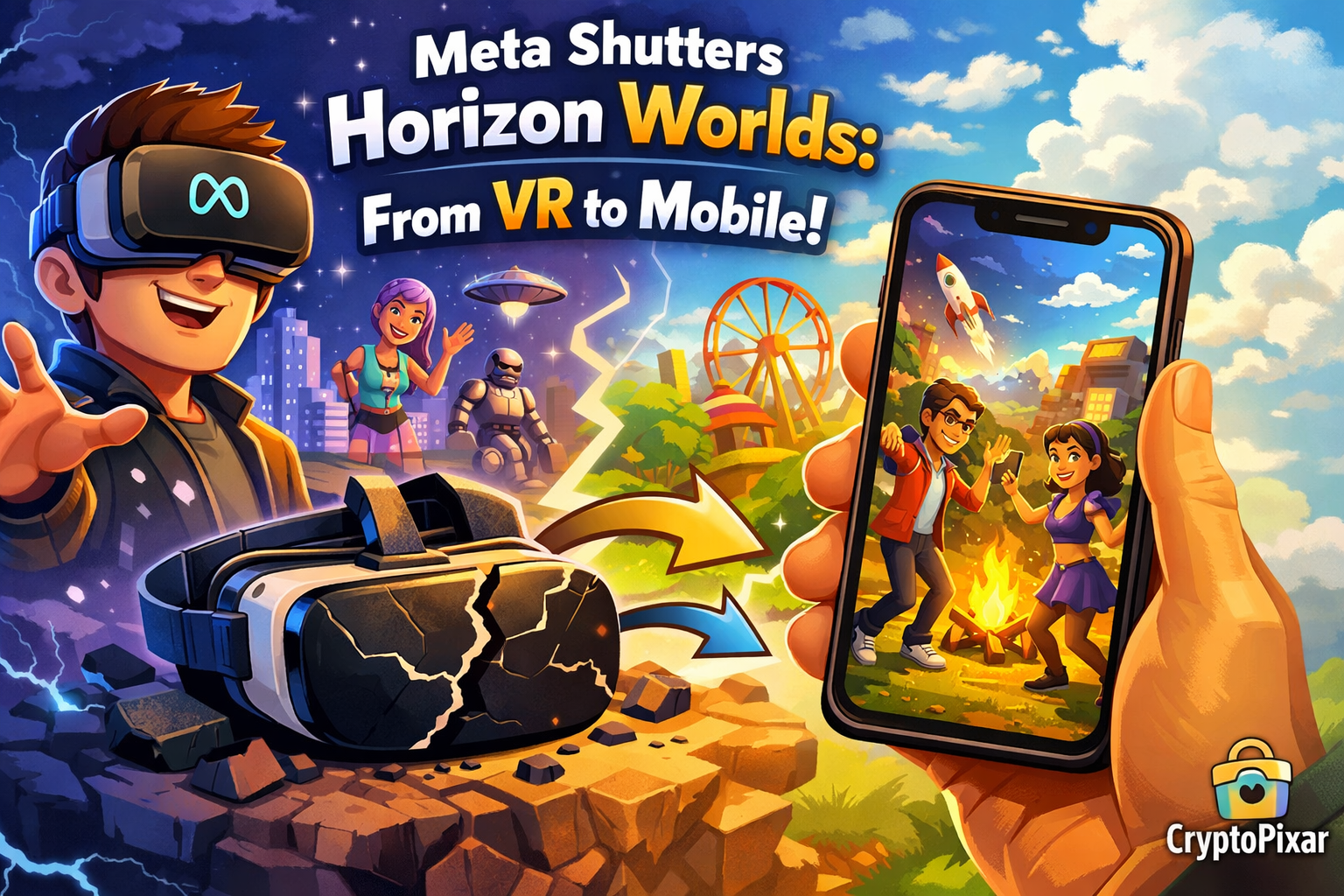
Meta confirmed that users will soon lose access to the Meta Horizon Worlds metaverse through virtual reality headsets, marking a major strategic retreat. Once promoted as the centerpiece of a new digital frontier, the Meta Horizon Worlds metaverse is now being reshaped to align with changing user behavior and market realities.
Meta Horizon Worlds Metaverse Ends VR Chapter
The decision to discontinue virtual reality support for the Meta Horizon Worlds metaverse represents a sharp turn from Meta’s earlier roadmap. When the platform launched in 2021, it was built as a fully immersive VR environment where users could create, explore, and socialize in digital spaces.
However, starting mid June, users will no longer be able to access the Meta Horizon Worlds metaverse through VR devices. The company has also halted the ability to build and update virtual environments specifically designed for VR. This effectively closes the chapter on the platform’s original identity.
The Meta Horizon Worlds metaverse was once positioned as a gateway to the future of online interaction. Yet, adoption challenges and limited engagement compared to mainstream platforms have forced Meta to rethink its approach.
Mobile Strategy Reshapes Meta Horizon Worlds Metaverse
Meta’s pivot suggests that the Meta Horizon Worlds metaverse will now evolve into a mobile first ecosystem. This move aligns with broader industry trends where accessibility often outweighs immersion.
Internal leadership at Reality Labs has already hinted that the Meta Horizon Worlds metaverse would gradually transition toward mobile usage. The reasoning is straightforward. Mobile platforms offer a significantly larger user base and lower entry barriers compared to VR hardware.
Competitors like Roblox and Fortnite have demonstrated that scale comes from cross platform availability rather than hardware specific ecosystems. While those platforms thrive on mobile, PC, and console, the Meta Horizon Worlds metaverse remained largely confined to VR, limiting its growth potential.
By shifting focus, Meta aims to reposition the Meta Horizon Worlds metaverse as a more accessible and scalable product that can compete in the broader digital entertainment landscape.
Financial Pressure Drives Meta Horizon Worlds Metaverse Shift
The transformation of the Meta Horizon Worlds metaverse is not just about user preferences. It is also deeply tied to financial realities. Meta’s Reality Labs division has accumulated staggering losses over the past few years, reaching nearly 80 billion dollars since 2020.
These losses highlight the immense cost of building and maintaining a VR driven ecosystem like the Meta Horizon Worlds metaverse. Despite heavy investment, the returns have not matched expectations, forcing the company to reassess its priorities.
Recent workforce reductions within Reality Labs further underscore this shift. Meta is redirecting resources toward areas with stronger growth potential, including artificial intelligence and augmented reality technologies.
The Meta Horizon Worlds metaverse, once the centerpiece of Meta’s future vision, is now part of a broader restructuring effort aimed at improving efficiency and profitability.
Meta Horizon Worlds Metaverse Reflects Wider Industry Trends
The decline in focus on the Meta Horizon Worlds metaverse mirrors a larger trend across both tech and crypto sectors. In 2021, the metaverse narrative dominated headlines, with companies racing to build virtual ecosystems and investors pouring capital into related projects.
However, interest has cooled significantly. Blockchain based metaverse tokens have seen dramatic value declines, with leading projects losing the majority of their peak valuations. This shift indicates that the hype surrounding virtual worlds has given way to more practical and scalable innovations.
At the same time, artificial intelligence has emerged as the new focal point for tech investment. Companies are reallocating resources to stay competitive in this rapidly evolving space.
The evolution of the Meta Horizon Worlds metaverse reflects this transition. Instead of pursuing an ambitious but costly VR vision, Meta is adapting to a landscape where flexibility and reach are more critical than immersion alone.
What Lies Ahead for Meta Horizon Worlds Metaverse
The future of the Meta Horizon Worlds metaverse will depend on how effectively Meta executes its mobile strategy. While the pivot may disappoint early adopters who embraced the VR experience, it could open the door to a much larger audience.
A mobile first Meta Horizon Worlds metaverse has the potential to integrate more seamlessly into everyday digital habits. This could drive higher engagement and create new opportunities for content creators and developers.
At the same time, the shift raises questions about the long term viability of fully immersive virtual worlds. The Meta Horizon Worlds metaverse was once seen as a glimpse into the next phase of the internet. Now, it serves as a reminder that technological visions must align with user behavior and economic sustainability.
Disclaimer: Parts of this article were generated with the assistance from AI tools and reviewed by our editorial team to ensure accuracy and adherence to our standards.