

 Paul Johnson
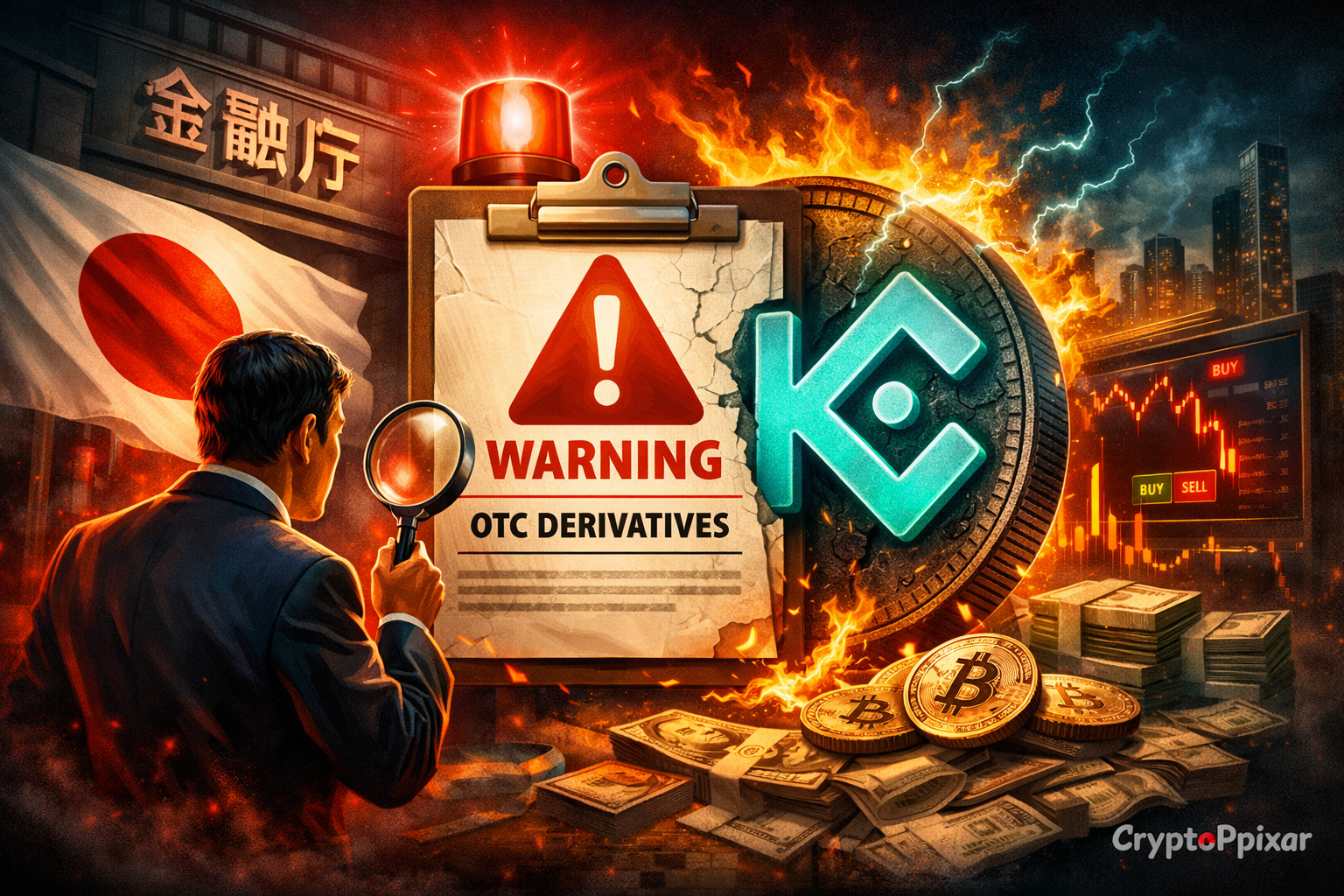
 Japan financial watchdog flags KuCoin over OTC derivatives transactions, raising compliance concerns as regulators tighten oversight on unregistered crypto platforms.
The Japan financial watchdog flags KuCoin once again, signaling a sharper regulatory stance on crypto platforms operating beyond legal boundaries. In its latest action, authorities have raised concerns over over the counter derivatives activity conducted without proper registration, reinforcing Japan’s commitment to stricter compliance in a rapidly evolving digital asset landscape.
Japan Financial Watchdog Flags KuCoin for Unregistered Derivatives Activity
The Japan financial watchdog flags KuCoin as part of a broader move targeting crypto platforms that are allegedly operating without authorization. The Financial Services Agency has issued formal notices to several entities, citing concerns around solicitation of over the counter derivatives trading through online channels.
Among the platforms named, KuCoin stands out due to its reported engagement with users in Japan. While other firms mentioned operate on a more global scale, regulators have specifically pointed to KuCoin’s accessibility to Japanese residents, placing it firmly under scrutiny.
This is not the first time the Japan financial watchdog flags KuCoin. The exchange has previously faced similar warnings, highlighting an ongoing tension between global crypto platforms and Japan’s strict regulatory framework. Authorities have consistently emphasized that any firm offering financial products to local users must comply with registration requirements.
Regulatory Pressure Intensifies on Crypto Platforms
The latest development underscores how the Japan financial watchdog flags KuCoin within a wider enforcement strategy. Regulators are increasingly focusing on unregistered entities that provide complex financial instruments such as derivatives, which carry higher risks for retail investors.
Japan has long maintained one of the most structured crypto regulatory environments in the world. Exchanges must adhere to detailed compliance standards, including registration, user protection measures, and transparency requirements. Platforms that fail to meet these criteria often face warnings, restrictions, or operational barriers.
Earlier actions against KuCoin included requests directed at major app distribution platforms to limit access to the exchange’s services within Japan. These steps reflect a coordinated effort to curb unregulated exposure and ensure that local investors interact only with approved platforms.
By taking repeated action, the Japan financial watchdog flags KuCoin as a case study in regulatory enforcement, demonstrating that authorities are willing to escalate measures when compliance gaps persist.
Growing Crypto Adoption Meets Strong Oversight
The fact that the Japan financial watchdog flags KuCoin comes at a time when crypto adoption in the country remains significant. With millions of active accounts, Japan represents a mature and highly engaged digital asset market.
This widespread adoption has made regulatory clarity even more critical. Authorities aim to strike a balance between encouraging innovation and protecting investors from potential risks associated with unregulated platforms.
Japan’s position in global crypto adoption rankings reflects steady participation rather than speculative surges. This stability is largely attributed to the country’s proactive regulatory approach, which seeks to build long term trust in the ecosystem.
As the Japan financial watchdog flags KuCoin, it sends a clear message that market growth must align with compliance. Platforms looking to tap into Japan’s user base are expected to meet stringent legal and operational standards.
Legal Framework Shift Could Expand Enforcement Power
A key factor behind why the Japan financial watchdog flags KuCoin now lies in the country’s upcoming regulatory transition. Authorities are preparing to move oversight of crypto related activities into a more comprehensive financial law framework.
This shift is expected to significantly enhance regulatory reach. It will introduce stricter reporting obligations and grant regulators greater authority to act against entities operating outside the legal perimeter.
For crypto firms, this means heightened scrutiny not only on trading services but also on token issuance and promotional activities. The evolving framework indicates that Japan is moving toward a more integrated approach to digital asset regulation.
The decision to act as the Japan financial watchdog flags KuCoin may therefore be part of a broader preparation for this transition. By identifying non compliant platforms early, regulators can establish clearer boundaries before the new rules take full effect.
Political and Market Signals Add to Regulatory Momentum
Alongside enforcement actions, recent developments in Japan’s political and crypto landscape have added urgency to regulatory oversight. Authorities are reportedly examining cases involving token projects that have gained sudden market traction.
Public statements from national leadership distancing themselves from certain crypto initiatives highlight concerns about market speculation and misinformation. These events further justify why the Japan financial watchdog flags KuCoin and similar platforms, as regulators aim to maintain credibility and stability in the market.
The combination of rising adoption, evolving laws, and high profile market incidents is shaping a more assertive regulatory environment. In this context, enforcement actions are likely to become more frequent and more targeted.
Conclusion
The decision as the Japan financial watchdog flags KuCoin reflects a decisive push toward tighter control over unregistered crypto activities. With increasing adoption and an impending legal transformation, Japan is reinforcing its position as a jurisdiction that prioritizes compliance and investor protection.
For global exchanges, the message is clear. Access to one of the world’s most established crypto markets comes with strict regulatory expectations. As authorities continue to act, platforms must either adapt to local laws or risk facing escalating restrictions.
Disclaimer: Parts of this article were generated with the assistance from AI tools and reviewed by our editorial team to ensure accuracy and adherence to our standards.