







 Tom Kushner
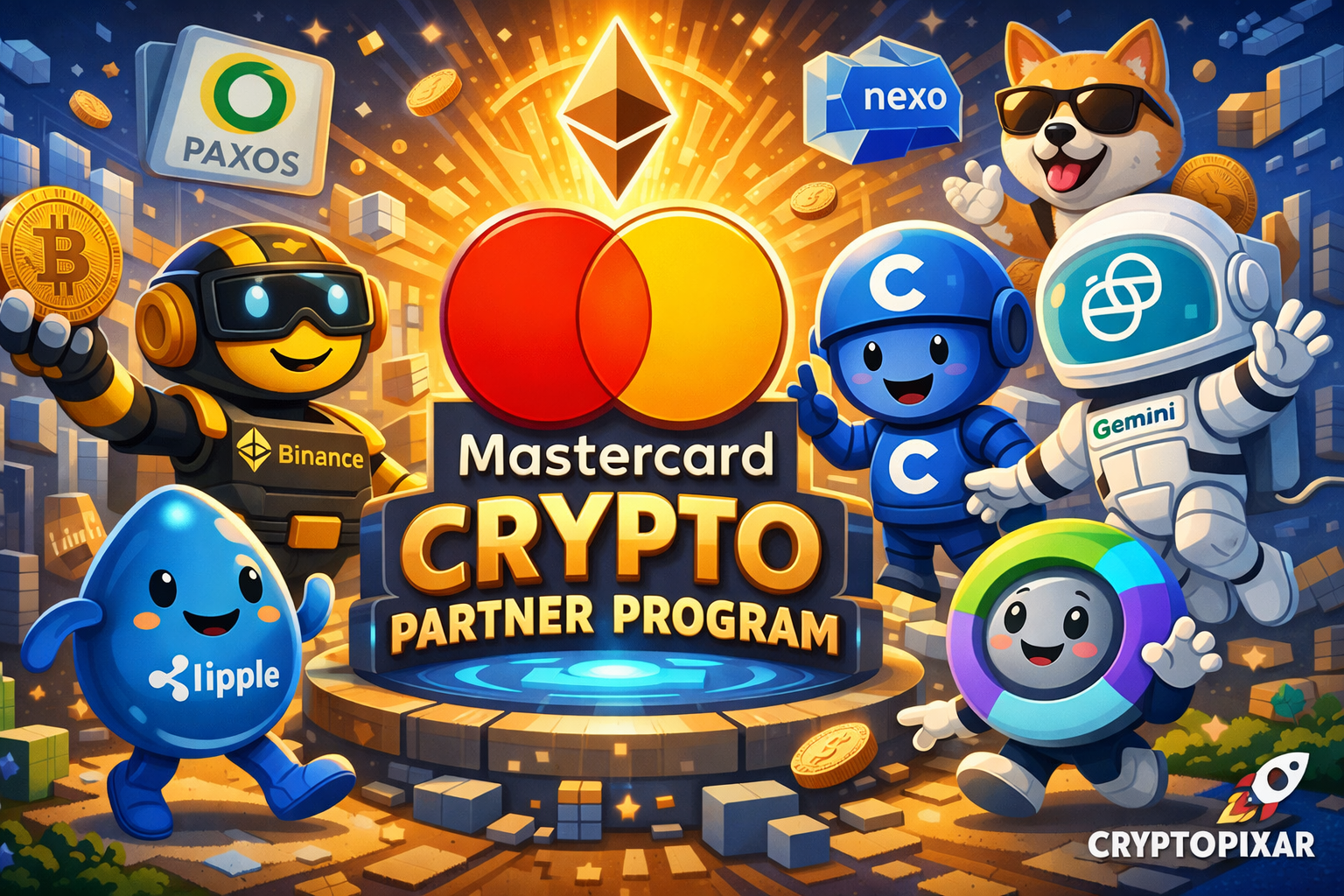
 Mastercard crypto partner program brings together more than 85 blockchain and fintech leaders including Binance, Circle, Ripple and PayPal to develop next generation digital asset payment systems.
Mastercard Crypto Partner Program Brings Global Crypto and Finance Leaders Together
The Mastercard crypto partner program marks a significant step in the evolution of digital asset payments as the global payments giant brings together more than 85 companies from across the blockchain and financial technology ecosystem.
The initiative connects crypto exchanges, blockchain networks, infrastructure providers and financial institutions to collaborate on payment systems that use blockchain technology. With digital assets increasingly entering mainstream finance, Mastercard aims to explore how blockchain powered infrastructure can improve cross border payments, settlements and commercial transactions.
Major industry players including Binance, Circle, Gemini, Paxos, Ripple, PayPal, Polygon, Solana, Crypto.com, MoonPay, Fireblocks and the Canton Network have joined the Mastercard crypto partner program. Together they will experiment with solutions that merge blockchain innovation with existing payment rails.
The move signals how traditional finance companies are accelerating their efforts to integrate crypto technology into global payment systems.
Mastercard Crypto Partner Program Targets Cross Border Payments and Settlement
At the heart of the Mastercard crypto partner program is a focus on real world financial use cases that could reshape how money moves globally.
Participants in the program will collaborate on blockchain powered tools that support cross border transfers, business payments and settlement systems. These applications are increasingly gaining traction as financial institutions look for faster and more transparent alternatives to traditional payment networks.
Mastercard believes blockchain technology can streamline processes that often involve multiple intermediaries and slow settlement times. By connecting crypto companies with banks and payment providers, the Mastercard crypto partner program creates a collaborative environment where new infrastructure can be tested and refined.
According to the company, digital assets are now entering a new stage of development. Technologies once seen primarily in experimental environments are now being applied to practical financial services such as remittances and corporate payments.
This shift highlights how blockchain solutions are gradually moving from niche innovation to mainstream financial infrastructure.
Major Crypto Industry Players Join Mastercard Crypto Partner Program
The Mastercard crypto partner program includes a wide range of industry leaders that represent different parts of the digital asset ecosystem.
Crypto exchanges such as Binance, Gemini and Crypto.com bring expertise in trading platforms and user adoption. Blockchain networks including Polygon and Solana contribute scalable infrastructure for decentralized applications and payment systems.
Meanwhile companies such as Circle and Paxos specialize in stablecoin technology that enables digital assets pegged to fiat currencies. These stablecoins are often seen as a bridge between traditional finance and blockchain based payments.
Payment companies like PayPal and MoonPay also add their experience in consumer transactions and crypto onboarding. Infrastructure firms including Fireblocks provide the security and custody frameworks necessary for institutional participation.
By assembling a diverse network of participants, Mastercard aims to accelerate experimentation with blockchain payment systems that could operate alongside existing financial infrastructure.
Mastercard Expands Digital Asset Strategy as Visa Also Moves Into Blockchain
The launch of the Mastercard crypto partner program comes amid growing competition between global payment networks as both Mastercard and Visa expand their blockchain initiatives.
Visa has introduced several pilot projects in recent years designed to integrate stablecoins and blockchain settlement with its payment ecosystem. One notable experiment allows banks to fund cross border payments using stablecoins through the Visa Direct platform, enabling faster payouts.
Visa has also broadened its support for multiple stablecoins across different blockchains. These networks include Ethereum, Solana, Stellar and Avalanche, which are widely used for digital asset transactions.
Mastercard has been pursuing similar goals through partnerships, startup accelerator programs and crypto linked payment cards. The company has also worked with fintech firms to explore tokenized payment infrastructure.
Recent data shared by Mastercard revealed that roughly thirty percent of the company’s transactions were tokenized in 2024. This figure reflects the growing adoption of digital technologies that convert traditional financial assets into blockchain based tokens.
Stablecoins and Blockchain Settlements Gain Momentum
Another development highlighting Mastercard’s digital asset push is its collaboration with SoFi Technologies. The partnership allows settlement of card transactions using SoFiUSD, a dollar backed stablecoin issued by SoFi Bank.
Through this arrangement, issuers and payment processors can settle transactions across Mastercard’s network using the digital dollar. SoFi Bank also plans to settle its own Mastercard debit and credit card transactions with the stablecoin.
These experiments demonstrate how stablecoins are becoming a key component of blockchain based payment infrastructure. Because they maintain a fixed value relative to traditional currencies, stablecoins can serve as a reliable medium for digital settlement systems.
The Mastercard crypto partner program could further accelerate the development of such use cases by connecting stablecoin providers, blockchain developers and financial institutions in a shared ecosystem.
The Future of the Mastercard Crypto Partner Program
As the Mastercard crypto partner program begins its collaborative work, the initiative reflects a broader transformation within the global payments industry.
Traditional financial institutions are increasingly exploring blockchain technology not as a replacement for existing systems but as an enhancement that can improve efficiency, speed and transparency.
By working with leading crypto companies and infrastructure providers, Mastercard aims to develop solutions that combine the reliability of established payment networks with the innovation of decentralized technology.
If successful, the Mastercard crypto partner program could play an important role in shaping how digital assets are integrated into everyday financial services. From cross border transfers to corporate payments and settlements, blockchain based systems are steadily moving closer to the core of global finance.
Disclaimer: Parts of this article were generated with the assistance from AI tools and reviewed by our editorial team to ensure accuracy and adherence to our standards.