


 Rebecca Cruz
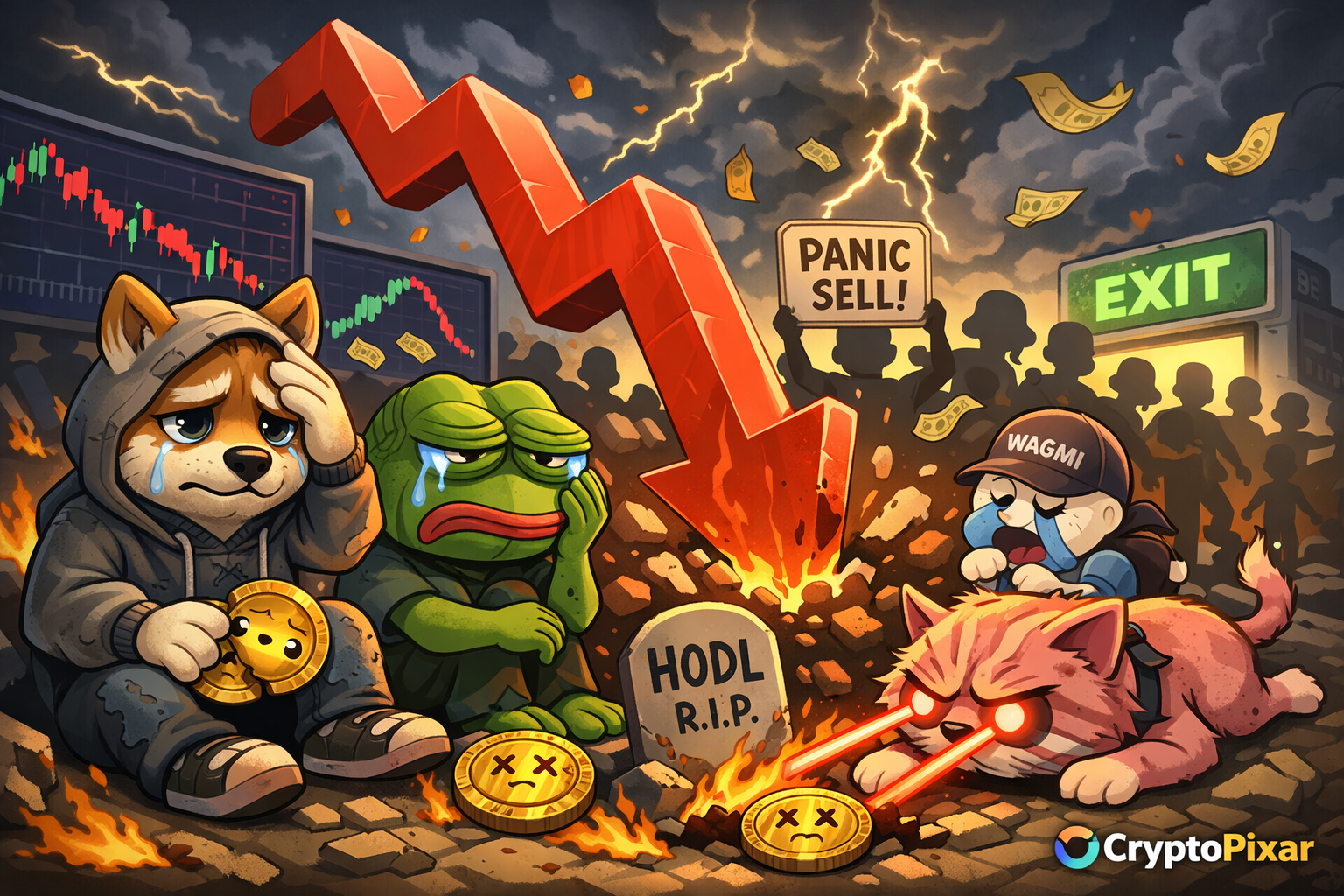
 The memecoin market has plunged over 34 percent, triggering a classic capitulation signal. Analysts suggest this downturn could mark the start of a major recovery phase.
Memecoin Market Flashes Classic Capitulation Signal as Traders Lose Hope
The memecoin market has entered one of its most volatile phases in recent months, shedding nearly a third of its total capitalization. Despite widespread pessimism, on-chain analytics suggest this slump might actually signal an upcoming rebound. Crypto intelligence platform Santiment believes the current despair surrounding meme tokens could be setting the stage for a surprise turnaround.
According to Santiment’s latest report, the collective belief that the memecoin market is “dead” reflects a familiar pattern of capitulation seen before major recoveries. The platform highlighted that when traders universally abandon a sector, the conditions often align for contrarian investors to step back in. This pattern, observed multiple times in previous market cycles, may once again indicate that the worst could be behind the memecoin market.
The Memecoin Market Plunge: A Test of Conviction
Over the past thirty days, the memecoin market capitalization has fallen by roughly 34 percent to around $31 billion. The steep decline followed a broader crypto market selloff, with Bitcoin briefly dipping to near $60,000, marking its lowest level since October 2024.
This correction hit most meme tokens hard, except for a few outliers. Among the top performers, Pippin recorded a massive 243 percent surge, defying market trends. Official Trump token gained just over 1 percent, while Shiba Inu posted a similar modest increase. These isolated gains show that while the broader memecoin market remains under pressure, certain projects still attract speculative interest.
Historically, the market cycle begins with Bitcoin breaking new highs, followed by a rotation of capital into Ethereum and finally into high-risk altcoins, including meme tokens. However, as institutional investors increasingly shape market dynamics, many analysts are now questioning whether that traditional rotation model still applies.
The memecoin market is now testing investor conviction more than ever. The sentiment across social platforms has turned overwhelmingly bearish, with traders declaring the end of the meme era. Yet, according to Santiment, such narratives often emerge just before market reversals.
Analysts See Classic Contrarian Setup Emerging
Santiment’s data highlights that this phase of mass pessimism might actually represent opportunity. The analytics firm described the current environment as a “classic capitulation signal,” emphasizing that the moment of maximum pain in the memecoin market is often where recoveries begin.
When investors collectively dismiss a sector, the remaining sellers are often exhausted. This dynamic can set the stage for a rebound as even modest inflows push prices upward. Santiment warned traders not to ignore markets that appear lifeless, as the very absence of interest can mark the beginning of new growth.
This contrarian view aligns with historical behavior across different asset classes, where recoveries frequently occur when confidence is at its lowest. The current collapse in memecoin sentiment, combined with shrinking trading volumes, might therefore signal a hidden accumulation phase rather than a permanent decline.
Selective Altcoin Season May Reshape Market Recovery
Analysts are also debating whether the next altcoin season will resemble previous cycles. Craig Cobb, founder of The Grow Me, suggested that future rallies may be more selective than in past years. Instead of a universal surge lifting all tokens, capital could concentrate in specific narratives or ecosystems showing real user engagement or unique community strength.
For the memecoin market, this could mean that not every meme token will recover equally. Projects backed by active communities, recognizable branding, or cultural momentum could outperform others that lack sustained interest. In other words, survival of the most meme-worthy might define the next phase of growth.
While many traders now view meme assets as speculative relics of the past, institutional trends in 2025 and early 2026 show that retail-driven narratives continue to hold influence. The massive price volatility and viral nature of meme coins remain appealing to traders seeking short-term opportunities.
Market Fear May Signal Beginning of a Recovery
The memecoin market remains one of the most sentiment-driven sectors in crypto. Santiment’s social analysis shows an increasing imbalance between bearish and bullish discussions, with fear dominating public discourse. Historically, markets tend to move in the opposite direction of crowd sentiment. When pessimism peaks, price recoveries often follow.
Santiment’s report concluded that this widespread disbelief, even during short-term rallies, is a healthy foundation for a sustainable recovery. It suggested that the combination of panic selling, fading attention, and emotional exhaustion typically defines the final stage of a downtrend.
As the memecoin market struggles to regain momentum, patient traders might see this as a moment to watch rather than walk away. If history repeats itself, the very sectors written off today could become the surprise leaders of tomorrow’s rally.
Disclaimer: Parts of this article were generated with the assistance from AI tools and reviewed by our editorial team to ensure accuracy and adherence to our standards.