

 Tom Kushner
 SEC Nasdaq tokenized trading trial approval opens doors for blockchain based stock trading alongside traditional markets. Explore what this means for investors and market structure.
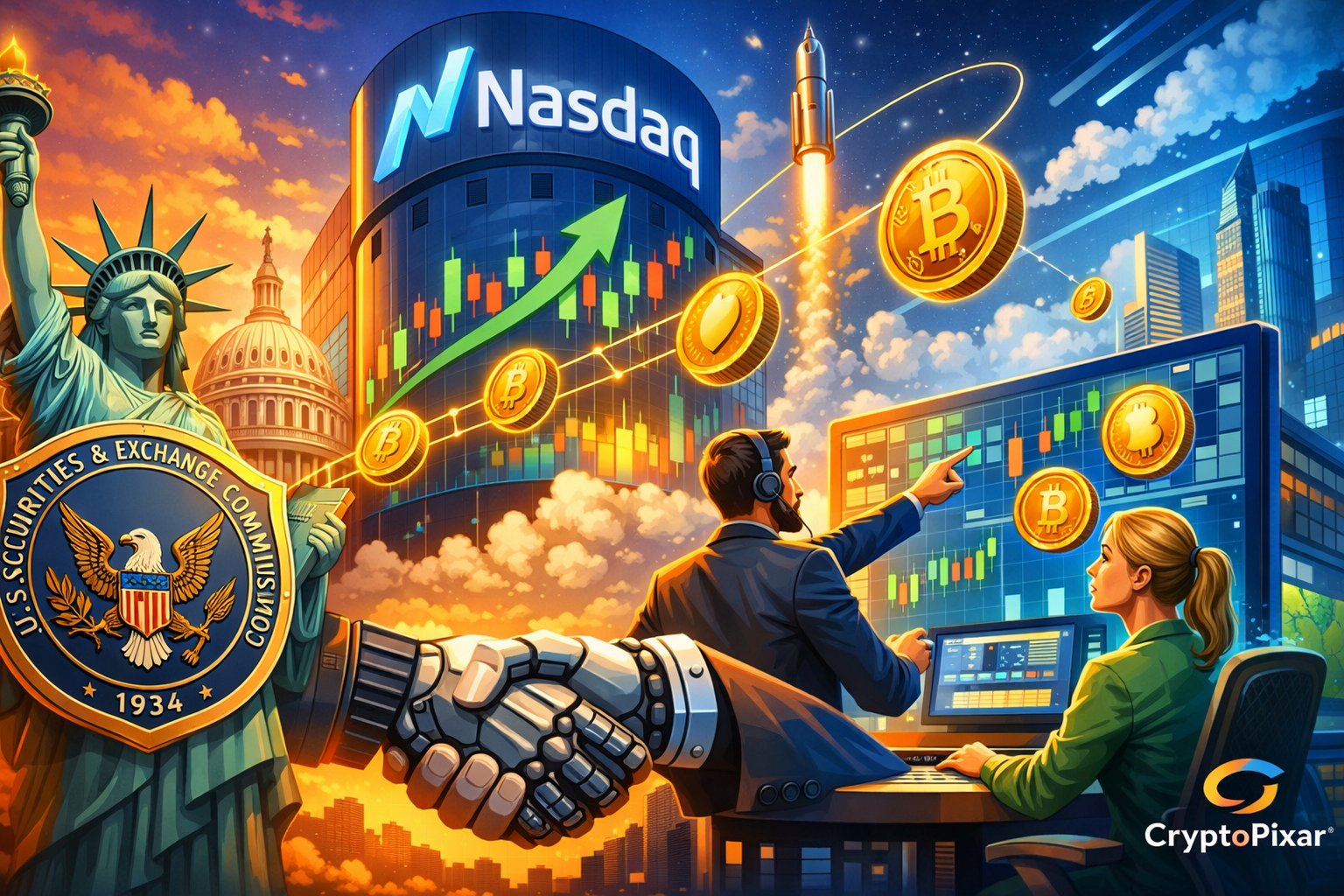
The SEC Nasdaq tokenized trading trial has officially moved from concept to reality, marking a pivotal shift in how traditional finance and blockchain infrastructure converge. In a landmark regulatory decision, the United States Securities and Exchange Commission has approved Nasdaq’s proposal to test tokenized securities trading within its existing exchange framework.
This development is not just another experiment in financial innovation. It represents a carefully structured attempt to blend the speed and flexibility of blockchain with the stability of regulated equity markets. As institutional interest in tokenization accelerates, the SEC Nasdaq tokenized trading trial could redefine how stocks are issued, traded, and settled in the years ahead.
SEC Nasdaq tokenized trading trial brings blockchain to mainstream markets
The SEC Nasdaq tokenized trading trial allows Nasdaq to introduce tokenized versions of select stocks and exchange traded funds while maintaining their traditional counterparts. What makes this pilot particularly unique is that both versions of the asset will coexist on the same trading infrastructure.
Investors participating in the trial will see tokenized stocks listed with identical tickers, pricing, and rights as their conventional equivalents. This ensures there is no fragmentation in value or ownership structure. Instead, the innovation lies purely in how these assets are represented and transferred using blockchain technology.
Nasdaq’s collaboration with the Depository Trust Company plays a critical role here. As a key pillar of US market infrastructure, the firm ensures that settlement, clearing, and custody processes remain aligned with regulatory standards even as tokenization is introduced.
The SEC Nasdaq tokenized trading trial essentially creates a controlled sandbox where blockchain based securities can operate without disrupting the broader financial ecosystem.
SEC Nasdaq tokenized trading trial limits access to eligible participants
Despite the excitement surrounding this initiative, the SEC Nasdaq tokenized trading trial is not open to the general public. Participation is restricted to a defined group of eligible market participants, ensuring that the pilot remains tightly monitored.
These participants will have the option to trade either traditional securities or their tokenized versions. This dual pathway allows regulators and market operators to compare performance, liquidity, and operational efficiency between the two formats in real time.
The scope of assets included in the SEC Nasdaq tokenized trading trial is also carefully curated. Only securities within the Russell 1000 Index are eligible, representing the largest publicly traded companies in the United States. In addition, certain exchange traded funds linked to major indices such as the S and P 500 and Nasdaq 100 are included.
By focusing on highly liquid and widely followed assets, the trial minimizes risk while maximizing the quality of insights gathered.
SEC Nasdaq tokenized trading trial addresses market risks and pricing concerns
One of the major challenges facing tokenization has been the potential for price discrepancies between blockchain based assets and their traditional counterparts. The SEC Nasdaq tokenized trading trial directly tackles this concern by ensuring both versions trade within the same order book.
This unified system eliminates the risk of arbitrage gaps and maintains consistent pricing across formats. It also strengthens market surveillance, as regulators can monitor all trading activity within a single framework rather than across fragmented platforms.
Earlier feedback on Nasdaq’s proposal highlighted concerns related to oversight and price divergence. However, subsequent amendments provided additional clarity on operational safeguards, ultimately satisfying regulatory requirements.
The SEC Nasdaq tokenized trading trial demonstrates that with the right structure, blockchain integration can meet the rigorous standards expected of public markets.
SEC Nasdaq tokenized trading trial reflects growing institutional push for tokenization
The approval of the SEC Nasdaq tokenized trading trial comes at a time when tokenization is gaining serious traction among major financial institutions. The ability to represent real world assets on blockchain networks offers several advantages, including faster settlement times and the potential for extended trading hours.
Nasdaq has already signaled its broader ambitions in this space through collaborations with crypto platforms. These efforts aim to enable seamless movement between traditional securities and their tokenized counterparts, opening the door for new use cases such as on chain collateral and programmable ownership.
Meanwhile, other industry giants are not standing still. The parent company of the New York Stock Exchange has also made strategic investments in crypto infrastructure to explore similar tokenized stock offerings. This growing competition underscores the significance of the SEC Nasdaq tokenized trading trial as a first mover initiative in regulated markets.
Adding to the momentum, regulatory leadership has hinted at further crypto related reforms, including potential exemptions that could simplify fundraising for blockchain based securities. Such developments could complement the SEC Nasdaq tokenized trading trial and accelerate adoption across the financial sector.
Final thoughts on SEC Nasdaq tokenized trading trial
The SEC Nasdaq tokenized trading trial is more than just a pilot program. It is a signal that regulators are willing to engage with blockchain innovation in a structured and pragmatic way. By allowing tokenized securities to coexist with traditional assets under the same rules, the initiative bridges a long standing gap between crypto technology and institutional finance.
If successful, the SEC Nasdaq tokenized trading trial could pave the way for a future where tokenized assets become a standard feature of global markets. For now, all eyes are on Nasdaq as it begins testing a model that could redefine the mechanics of trading itself.
Disclaimer: Parts of this article were generated with the assistance from AI tools and reviewed by our editorial team to ensure accuracy and adherence to our standards.