


 Tom Kushner
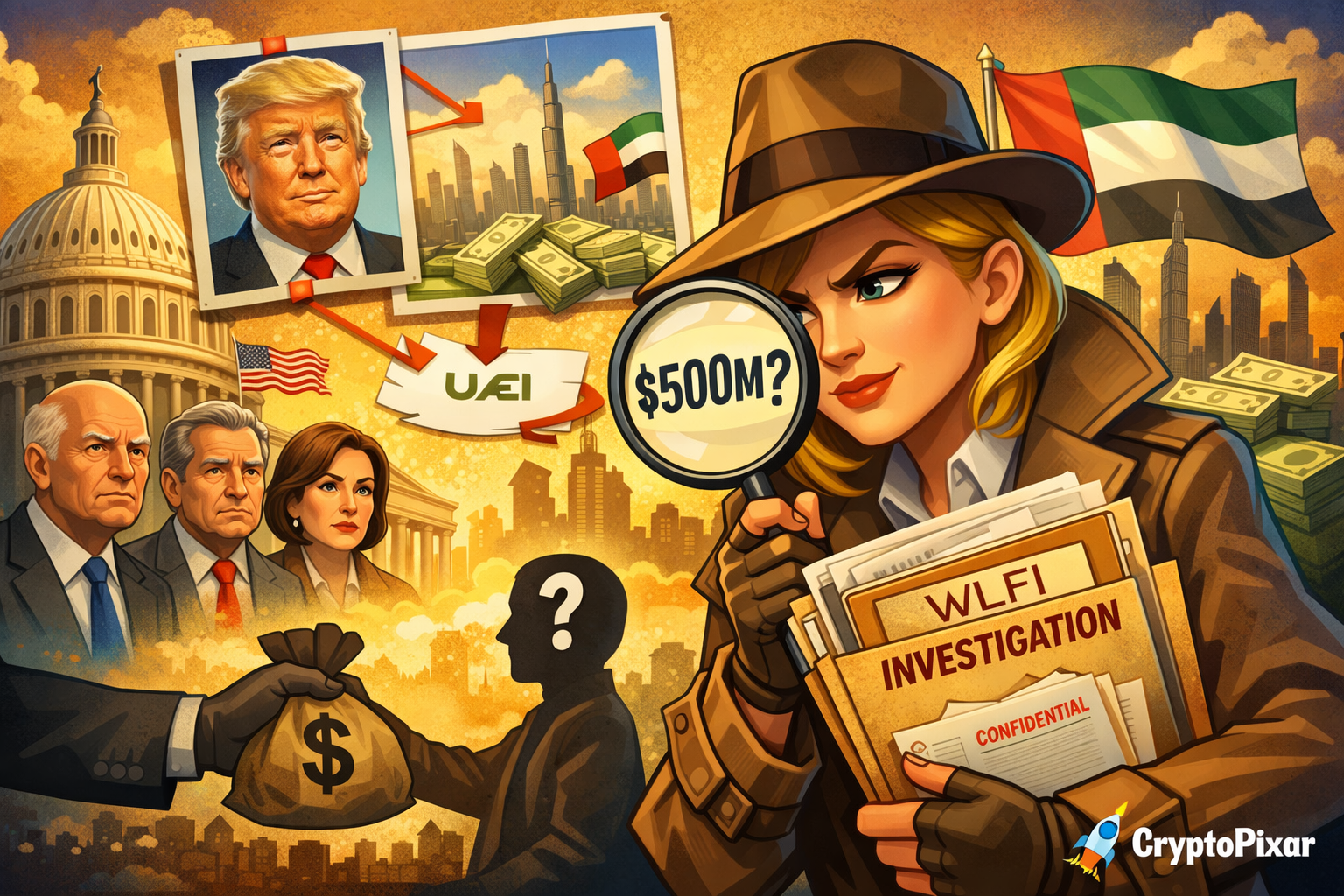
 US lawmakers are urging Treasury Secretary Scott Bessent to investigate a $500 million UAE stake in WLFI, citing concerns about data security, foreign influence, and Trump-linked crypto interests.
Senators raise alarm over UAE stake in WLFI
Political and financial tensions are converging in Washington as US senators demand a closer look into a $500 million UAE stake in WLFI, a crypto firm reportedly connected to the Trump family. The request comes amid growing anxiety over how foreign capital is flowing into American digital finance platforms that handle sensitive user data and blockchain infrastructure.
In a formal appeal to Treasury Secretary Scott Bessent, Senators Elizabeth Warren of Massachusetts and Andy Kim of New Jersey called for a review of whether the UAE-backed investment should face scrutiny by the Committee on Foreign Investment in the United States, better known as CFIUS. The senators emphasized that the deal might give a foreign state-linked fund significant access to a company deeply embedded in the American financial technology ecosystem.
The UAE stake in WLFI allegedly gives the foreign partner a 49 percent ownership share, making it the largest outside investor. Lawmakers argue that this could open pathways for potential data exposure and influence over corporate decisions at the crypto venture.
National security and data privacy concerns
At the core of the dispute surrounding the UAE stake in WLFI lies a concern that personal and financial information of US citizens could be indirectly accessible to a foreign government. Lawmakers noted that WLFI’s own privacy disclosures reveal its ability to collect a broad range of user data including wallet identifiers, IP addresses, and geolocation information all of which could be valuable in the wrong hands.
Senators Warren and Kim pointed out that CFIUS exists specifically to prevent such vulnerabilities by reviewing investments that may grant foreign entities access to sensitive technology or data. Their letter to Bessent seeks confirmation on whether this particular transaction was reported to the committee, and if not, whether a retroactive review is warranted.
The UAE stake in WLFI has added complexity because of its reported ties to Sheikh Tahnoon bin Zayed Al Nahyan, the national security adviser of the United Arab Emirates. His investment group, according to reports, was behind the capital infusion and may have directed a portion of the funds toward entities associated with the Trump family. The senators highlighted that two board seats linked to G42 executives were also part of the arrangement. G42, a technology company previously examined by US intelligence agencies, has been flagged for potential links to Chinese partners.
Growing political and regulatory scrutiny of WLFI
This is not the first time WLFI has attracted congressional and regulatory attention. The crypto firm has previously been at the center of investigations over alleged token transactions involving sanctioned foreign actors. In a separate appeal last year, Senators Warren and Jack Reed had urged federal agencies to investigate whether blockchain addresses tied to adversarial nations like North Korea, Russia, and Iran had purchased WLFI governance tokens.
Now, with the UAE stake in WLFI under fresh review, the conversation has expanded from illicit finance to geopolitical implications. Lawmakers worry that deep-pocketed investors from strategic rival states could use financial stakes to exert soft power over US technology networks. The possibility that a firm managing American financial data might have a major foreign government as its shareholder has stirred bipartisan unease.
Treasury officials have not publicly commented on the senators’ letter. However, the pressure on Secretary Bessent to initiate a CFIUS review underscores how digital asset ventures are increasingly being treated as critical national infrastructure rather than experimental financial startups.
Trump distances himself from WLFI deal
President Donald Trump has publicly distanced himself from the investment matter, stating he has no direct role in the WLFI transaction. Speaking to reporters earlier this month, he explained that his family oversees the company’s operations and that any external investments were managed independently. Trump said he was “unaware” of the $500 million deal involving the UAE fund, adding that “my sons are handling that.”
Even so, critics argue that the UAE stake in WLFI could pose conflict-of-interest risks as Trump’s administration steers national economic and foreign policy. With Bessent at the helm of the Treasury Department and CFIUS oversight, the issue places the administration in a delicate position balancing diplomatic relationships with the Gulf state while maintaining the integrity of the American regulatory framework.
What comes next for the WLFI investigation
The senators have requested a detailed response from Bessent by March 5. Should CFIUS proceed with a formal investigation, it would examine whether the UAE stake in WLFI grants the investor any undue control, access to proprietary technology, or sensitive consumer data. The committee’s findings could potentially lead to restrictions, divestment orders, or structural modifications to the ownership arrangement.
For the broader crypto industry, the case represents another turning point in how governments view cross-border digital asset investments. The UAE stake in WLFI underscores that crypto ventures, once seen as fringe experiments, now occupy a space where international finance, politics, and national security intersect.
As the debate unfolds, market analysts note that regulatory attention could increase across the crypto sector, especially for firms with opaque ownership structures or international capital sources. The Treasury Department’s decision on the UAE stake in WLFI will likely set a precedent for how the US handles future foreign investments in crypto platforms marking a defining moment in the fusion of digital assets and geopolitical oversight.
Disclaimer: Parts of this article were generated with the assistance from AI tools and reviewed by our editorial team to ensure accuracy and adherence to our standards.