


 Rebecca Cruz
 Wall Street investors including Morgan Stanley and BlackRock are doubling down on Bitmine Immersion Technologies as DeFi lenders face mounting liquidity stress.
Wall Street is ramping up its investment in Bitmine Immersion Technologies even as DeFi lenders struggle under tightening crypto liquidity. The move highlights a growing institutional appetite for Ethereum treasury exposure at a time when decentralized finance platforms face the harsh realities of a prolonged market slowdown.
Wall Street’s Growing Appetite for Bitmine Exposure
Institutional confidence in Bitmine is soaring. Leading investors such as Morgan Stanley, BlackRock, Goldman Sachs, and ARK Invest have all expanded their holdings in Bitmine Immersion Technologies despite the ongoing crypto downturn. This wave of accumulation underscores how traditional finance continues to find long term value in blockchain treasury assets even as market sentiment remains fragile.
Morgan Stanley increased its holdings in Bitmine by roughly 26 percent during the fourth quarter of 2025, bringing its position to more than 12 million shares valued at approximately 331 million dollars. ARK Investment Management, led by Cathie Wood, followed closely with a 27 percent increase to over 9 million shares. These moves demonstrate that despite a turbulent market, Wall Street remains confident in Bitmine’s role as a key Ethereum liquidity player.
BlackRock, Goldman Sachs, Vanguard, and Bank of America all made similar moves. BlackRock raised its holdings by more than 160 percent, while Goldman Sachs expanded its position by nearly sixfold. The largest leap came from Bank of America, which raised its exposure by over sixteen times compared to previous filings. Each of these institutions views Bitmine as a strategic asset in the evolving digital economy.
DeFi Platforms Struggle as Liquidity Tightens
While traditional institutions continue to accumulate Bitmine shares, DeFi lenders are confronting the opposite reality. The liquidity squeeze has accelerated across decentralized platforms, leading to a series of shutdowns and restructurings.
ZeroLend, once considered a promising DeFi lending protocol, announced its closure amid dwindling reserves and low user activity. Parsec, a crypto analytics firm that provided insights for DeFi investors, also ceased operations, citing volatility and liquidity constraints. The DeFi sector, once celebrated for offering borderless lending and borrowing opportunities, now finds itself struggling to retain capital as traders withdraw funds to minimize risk exposure.
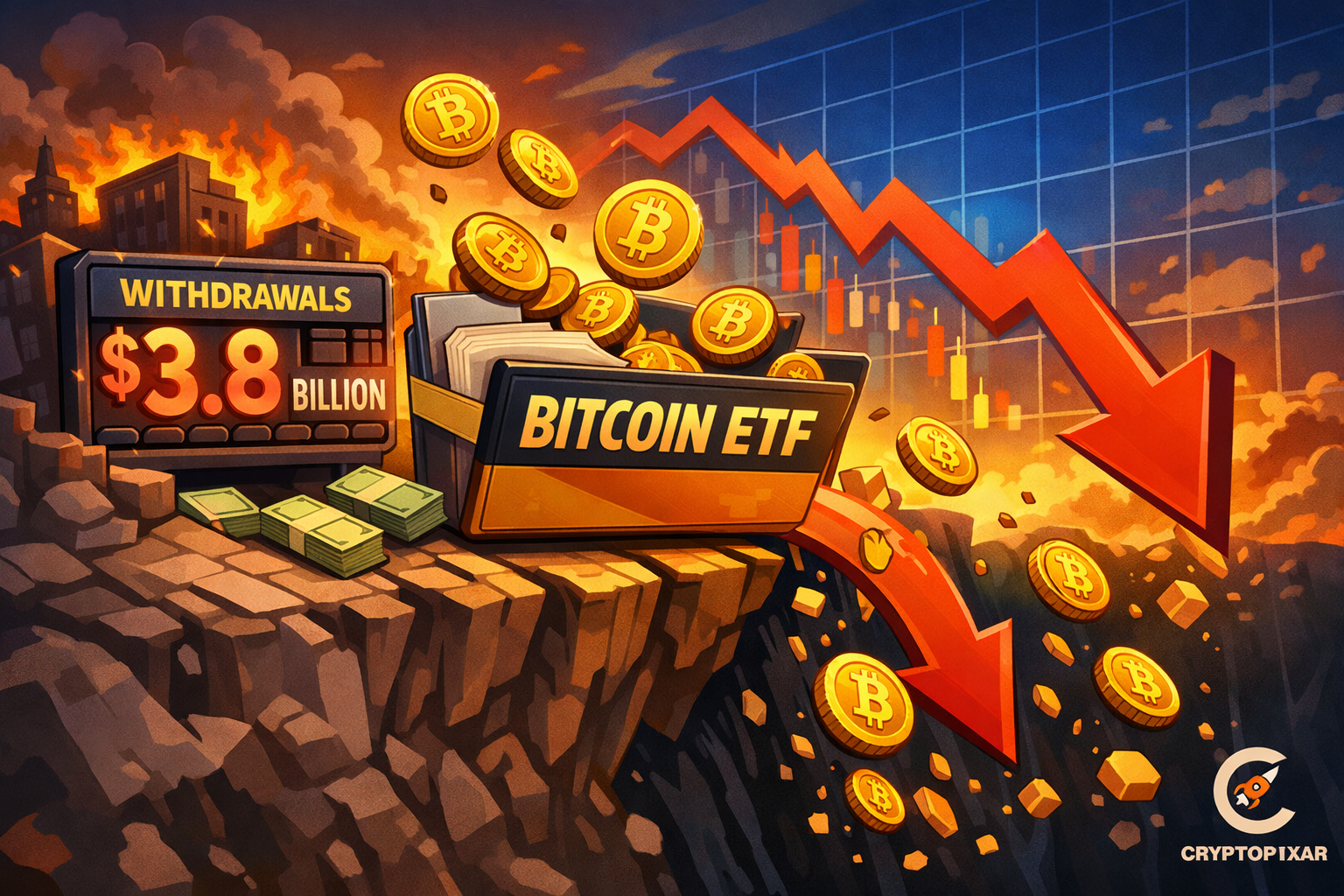
Despite these headwinds, Bitcoin and Ethereum both managed modest weekly gains of around 2.6 percent. However, inflows into exchange traded funds have shown signs of fatigue. US spot Bitcoin ETFs recorded three consecutive days of outflows, including a 165 million dollar withdrawal on Thursday. Ether ETFs mirrored the same pattern, flipping from early week inflows to significant outflows by midweek.
Bitmine Stock Faces Pressure but Institutional Faith Remains Strong
Bitmine’s stock performance paints a different picture from the bullish institutional accumulation. The company’s share price has fallen nearly 60 percent over the past six months, dropping to around 19.90 dollars in recent trading. Yet, that decline has not discouraged large investors. In fact, it appears to have created a buying opportunity for those betting on the long term fundamentals of Ethereum based treasury assets.
According to data compiled by crypto investor Collin, every one of the top eleven Bitmine shareholders expanded their position during the fourth quarter of 2025. This group includes Charles Schwab, Citigroup, Van Eck, Royal Bank of Canada, and the Bank of New York Mellon Corporation. The widespread increase in holdings suggests a coordinated institutional view that Bitmine’s valuation remains attractive despite near term volatility.
Market observers believe that Bitmine’s deep Ethereum reserves and treasury management expertise could position it as a central player in future institutional staking and tokenization models. The company’s ability to navigate liquidity cycles while maintaining exposure to high yield onchain assets makes it a strategic fit for traditional finance portfolios seeking diversification in the blockchain economy.
Institutional Strategy Shifts Toward Long Term Crypto Infrastructure
The pattern emerging across Wall Street reveals a clear strategic pivot. Rather than chasing short term price action, major institutions are positioning themselves within the infrastructure layer of digital assets. Bitmine’s business model, centered on Ethereum treasury management, appeals to investors seeking stability in a volatile sector.
DeFi’s liquidity crisis may have exposed weaknesses in decentralized lending mechanisms, but it has also spotlighted the resilience of blockchain infrastructure firms that provide the underlying financial plumbing. As institutions tighten their grip on companies like Bitmine, the crypto market could see a gradual migration of liquidity and trust from decentralized lenders to regulated entities that manage digital asset treasuries.
Industry analysts suggest this dynamic could define the next stage of crypto market evolution one where traditional finance deepens its foothold while DeFi protocols undergo restructuring and consolidation.
Disclaimer: Parts of this article were generated with the assistance from AI tools and reviewed by our editorial team to ensure accuracy and adherence to our standards.